
Rethinking Cybersecurity GRC: From Compliance to Strategic Capability for CISOs and Leaders

Effective cybersecurity governance, risk management, and compliance (GRC) is no longer just about ticking boxes or compiling documentation. For CISOs, GRC leaders, risk managers, and executive teams, it must become a strategic capability that supports better security decisions and aligns with the organization’s overall security strategy. This article explores why traditional GRC struggles, what good GRC looks like, and how to build a practical operating model that connects governance with technical controls and emerging challenges like AI governance.
Why Traditional Cybersecurity GRC Struggles
Many organizations treat cybersecurity GRC as a compliance exercise focused on meeting regulatory obligations and passing audits. This approach often leads to:
Documentation overload: Excessive paperwork that does not translate into actionable insights.
Checkbox mentality: Meeting minimum requirements without understanding the underlying risks.
Siloed efforts: Governance, risk, and compliance teams working separately from security operations.
Lack of ownership: Unclear responsibilities for controls and risk decisions.
Static processes: Infrequent risk assessments and outdated controls that do not reflect evolving threats.
This traditional model limits the ability of organizations to respond to real risks and make informed decisions. It also frustrates CISOs and leaders who want GRC to support security strategy rather than hinder it.
What Good Cybersecurity GRC Looks Like
Good cybersecurity GRC enables organizations to:
Make informed security decisions based on risk insights.
Integrate governance with technical controls and security operations.
Assign clear ownership for controls and risk acceptance.
Continuously monitor risks and controls to adapt to changes.
Provide meaningful assurance to executives and regulators.
Align with business objectives and regulatory requirements without being driven solely by them.
Address emerging challenges such as AI governance within the GRC framework.
This approach transforms GRC from a compliance burden into a strategic asset that supports resilience and risk management.
Governance and Cybersecurity Risk Management
Governance sets the tone and structure for cybersecurity risk management. It defines roles, responsibilities, policies, and decision-making authority. Effective governance ensures:
Executive sponsorship and involvement in risk decisions.
Clear policies that guide risk appetite and control requirements.
Defined risk management processes that identify, assess, treat, and monitor risks.
Regular reporting to leadership on risk posture and control effectiveness.
Cybersecurity risk management should be dynamic, incorporating ongoing risk assessments and adapting controls to new threats. Frameworks like ISO 27001 and NIST provide guidance on establishing risk management processes without prescribing certification or compliance as the only goal.
Control Frameworks and Risk Assessments
Control frameworks organize security controls into categories that address specific risks. Common frameworks include:
ISO 27001: Focuses on establishing an information security management system (ISMS) with risk-based controls.
NIST Cybersecurity Framework: Provides a flexible approach to identify, protect, detect, respond, and recover from cybersecurity incidents.
Australian Cyber Security Centre (ACSC) Essential Eight: Prioritizes key mitigation strategies for common cyber threats.
Risk assessments evaluate the likelihood and impact of threats to assets, guiding which controls to implement or strengthen. They should be:
Regular and updated to reflect changing environments.
Collaborative, involving business and technical stakeholders.
Action-oriented, leading to clear risk treatment plans.
Control Ownership and Assurance
Assigning control ownership is critical to ensure accountability. Owners are responsible for implementing, maintaining, and reporting on controls. This clarity helps:
Avoid gaps or overlaps in control coverage.
Enable timely remediation of control weaknesses.
Support assurance activities such as audits and testing.
Assurance provides confidence that controls work as intended. It can include internal audits, external reviews, penetration testing, and continuous monitoring.
Continuous Monitoring and Evidence Collection
Continuous monitoring uses automated tools and processes to track control performance and detect anomalies. It supports:
Early identification of security incidents.
Real-time updates to risk assessments.
Evidence collection for compliance and assurance.
Evidence should be organized, accessible, and verifiable to support audits and reporting.
Risk Acceptance and Executive Reporting
Not all risks can be eliminated. Risk acceptance involves formally acknowledging residual risks and deciding to tolerate them based on business priorities. This requires:
Clear criteria for risk acceptance.
Documentation of decisions and rationale.
Communication to relevant stakeholders.
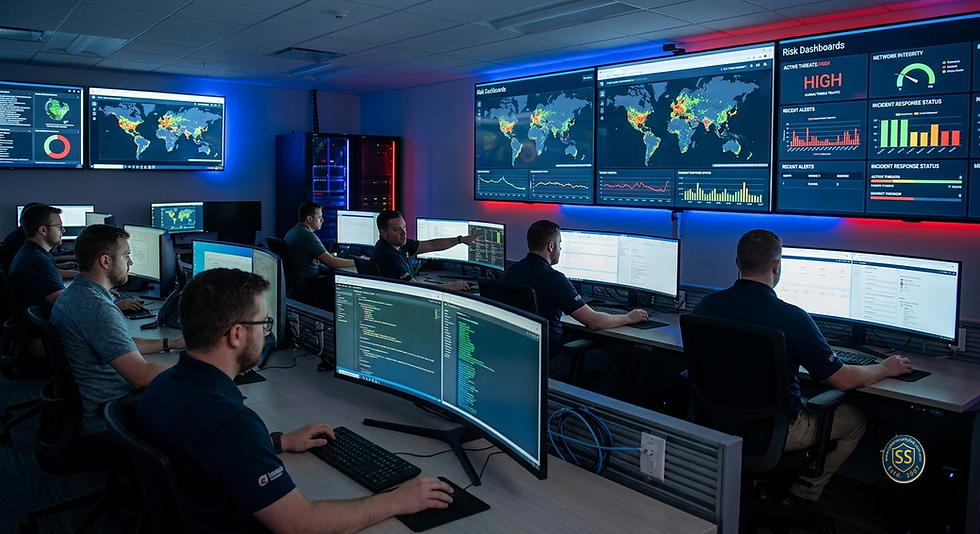
Executive reporting should focus on risk trends, control effectiveness, and strategic implications rather than technical details. Dashboards and summaries help leaders understand the security posture and make informed decisions.
Regulatory Obligations and Connecting GRC to Technical Controls
Regulatory requirements shape GRC activities but should not drive them exclusively. Organizations must interpret obligations in the context of their risk environment and business goals.
Connecting GRC to technical security controls means:
Mapping controls to risks and regulatory requirements.
Integrating GRC tools with security technologies like SIEM, endpoint protection, and identity management.
Using data from technical controls to inform risk assessments and reporting.
This connection ensures that governance translates into effective security actions.
AI Governance as an Emerging GRC Challenge
Artificial intelligence introduces new risks such as bias, lack of transparency, and automation errors. AI governance within cybersecurity GRC involves:
Defining policies for AI use and risk management.
Assessing AI-related risks alongside traditional cybersecurity risks.
Monitoring AI systems for compliance and performance.
Ensuring accountability for AI decisions and outcomes.
Addressing AI governance early helps organizations manage these risks proactively.
Practical Alignment Between Security Strategy and GRC
Aligning security strategy with GRC requires:
Involving security leaders in GRC design and execution.
Using risk assessments to prioritize security initiatives.
Ensuring GRC processes support operational security needs.
Communicating risk and control status in business terms.
Continuously improving GRC based on feedback and changing threats.
This alignment turns GRC into a tool that drives security improvements and business resilience.
Practical Operating Model for Cybersecurity GRC
A practical operating model includes:
Governance committee with executive and security representation.
Risk management process integrated with business risk management.
Control framework tailored to organizational risks and regulatory context.
Clear roles and responsibilities for control owners and risk decision-makers.
Continuous monitoring tools feeding into risk and compliance dashboards.
Regular assurance activities with documented findings and remediation.
Executive reporting focused on risk and strategic impact.
Processes for risk acceptance and escalation.
This model supports agility, accountability, and informed decision-making.
CISO Checklist for Effective Cybersecurity GRC
Ensure executive support and clear governance structures.
Align GRC activities with business objectives and risk appetite.
Use risk assessments to guide control selection and prioritization.
Assign control ownership and hold owners accountable.
Implement continuous monitoring and automate evidence collection.
Integrate GRC with technical security controls and operations.
Develop clear, concise executive reports focused on risk.
Address emerging risks such as AI governance proactively.
Review and update GRC processes regularly.
Foster collaboration between GRC, security, and business teams.
Key Takeaways
Cybersecurity GRC should enable better security decisions, not just compliance.
Effective governance and risk management require clear roles, policies, and ongoing assessments.
Control frameworks help organize security efforts but must be adapted to real risks.
Continuous monitoring and evidence collection support assurance and responsiveness.
Executive reporting should focus on risk and strategic impact.
Emerging challenges like AI governance need integration into GRC.
Aligning GRC with security strategy strengthens organizational resilience.
FAQ
Why does cybersecurity GRC often fail to deliver value?
Because it focuses too much on documentation and compliance checklists rather than risk-informed decision-making and integration with security operations.
How can GRC support better security decisions?
By providing timely risk insights, clear ownership, continuous monitoring, and meaningful assurance that align with business priorities.
What frameworks are useful for cybersecurity GRC?
ISO 27001, NIST Cybersecurity Framework, and the Australian Cyber Security Centre’s Essential Eight offer guidance on controls and risk management without mandating certification.
How does AI governance fit into cybersecurity GRC?
AI governance addresses risks specific to AI systems, requiring policies, risk assessments, monitoring, and accountability integrated into the broader GRC program.
What should executive reports focus on?
Risk trends, control effectiveness, residual risks, and strategic implications rather than technical details.
Cybersecurity GRC is evolving from a compliance task into a strategic capability that supports better security decisions and business resilience. CISOs and leaders who rethink GRC in this way can build stronger defenses, respond faster to risks, and demonstrate real value to their organizations. Start by assessing your current GRC approach and focus on integrating governance, risk management, and controls into a continuous, risk-informed process that aligns with your security strategy.


Comments